Misplaced items
Books on the wrong shelf, with the shelf they are actually on.

Shelf-reading robot
Shelf reading is the job every library puts off. The BeeBotic shelf-reading robot is a robot librarian that scans the RFID tags on your shelves after closing, works out which book is on which shelf, and has a report ready when staff arrive: what is missing, what is misplaced, and where it actually is.
Accuracy figure from existing deployments of the same robot technology. We confirm it in your library during the pilot.
How it works
The robot maps the floor and we mark each shelf range and its call numbers.
Pick the nights and floors to scan. The robot leaves its charger on its own.
Antennas at shelf heights read every tag as the robot drives each aisle.
A morning report lists missing, misplaced and out-of-sequence items, by shelf.
Staff go straight to the right shelf instead of reading the whole range.
Design
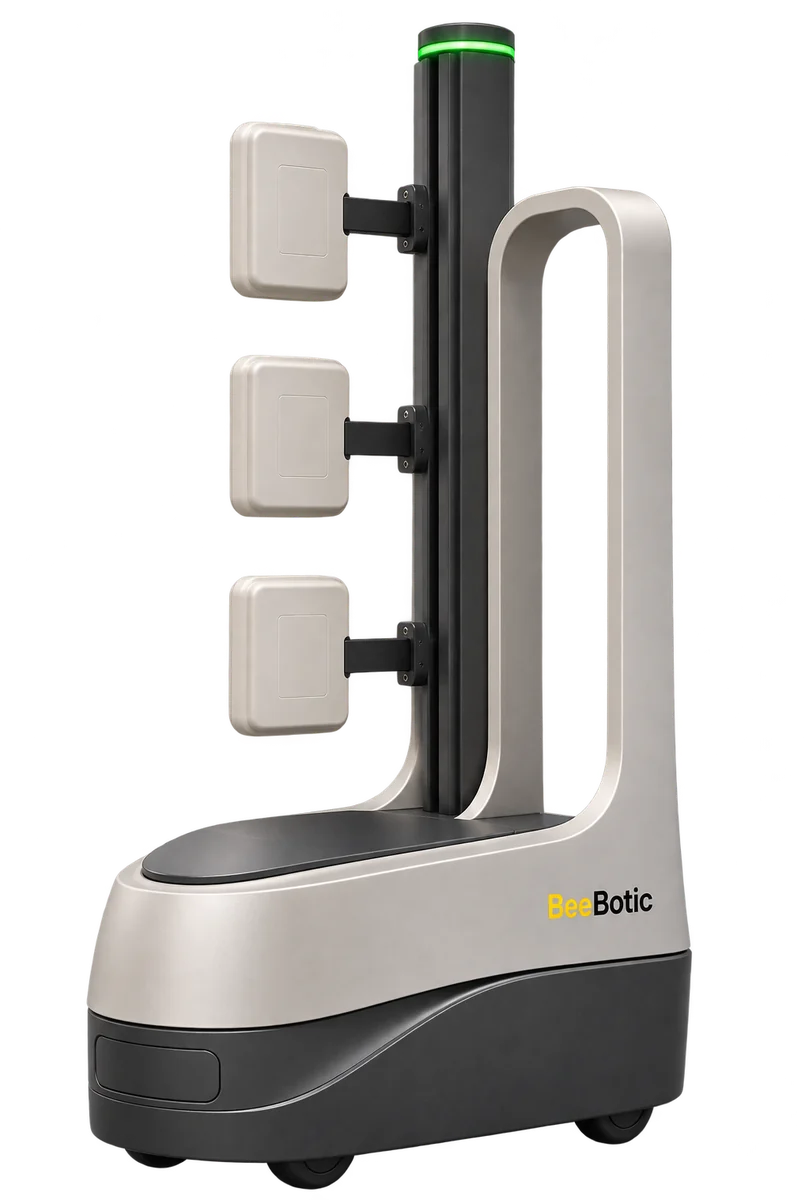
From the first quarter of 2027 the robot ships in BeeBotic's own casing. Robots delivered before then come in the current design. The robot hardware, software and local service are the same in both. Only the casing changes.
Accessory
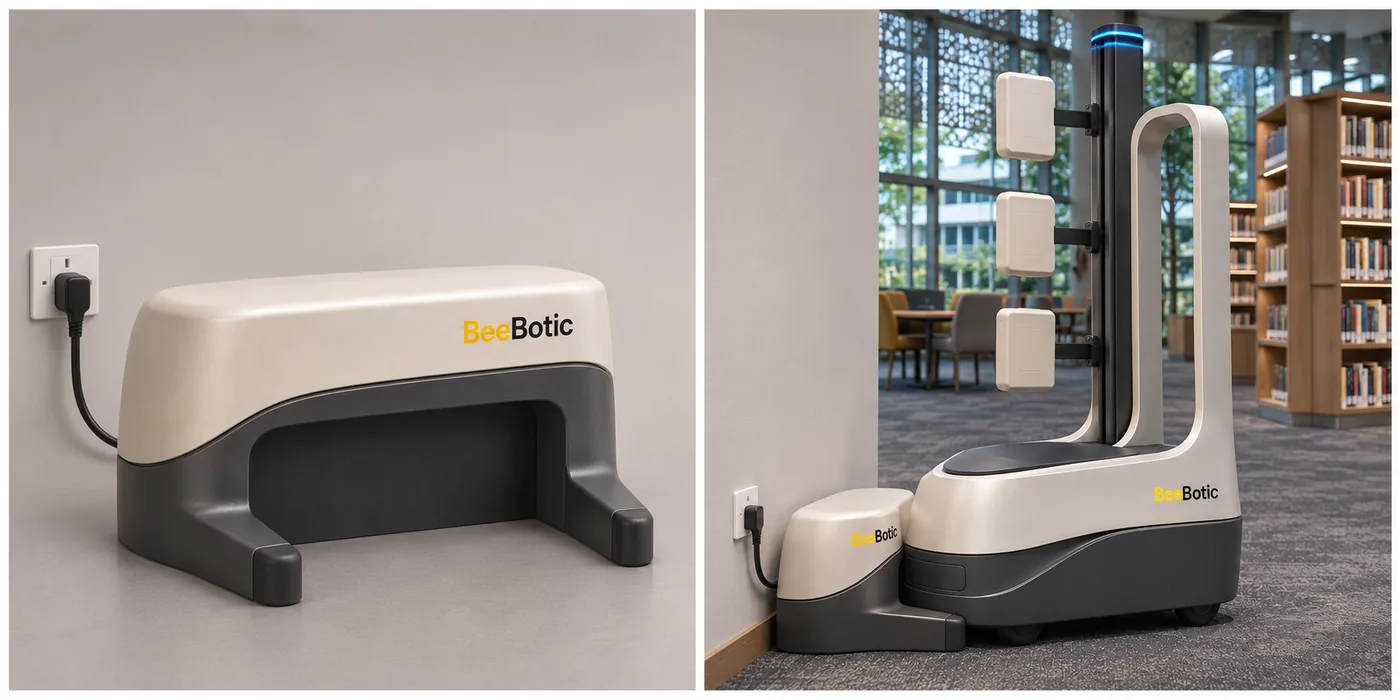
The robot returns to its dock on its own after each scan. The dock sits against a wall next to a standard power socket and matches the new casing.
The morning report
Books on the wrong shelf, with the shelf they are actually on.
Books on the right shelf but in the wrong call-number order.
Items the catalogue says are on the shelf that the robot did not find.
A full inventory without closing the library or pulling staff off the desk.
Where each item was last read, so a lost book can be traced.
Which ranges drift most, so you can plan reshelving and signage.
Results
A national library network using the same robot technology reported around 50% fewer staff hours spent keeping shelves in order.
A multi-level polytechnic library reported saving about 16 staff hours a day.
Taylor's University Library is our Malaysian reference site. Ask us to arrange a visit.
What you need
We check all of these in the site survey before you commit.
Yes. A nightly scan is effectively a rolling stock-take. You get full collection visibility without closing the library or taking staff off the desk, and you can see where each item was last read, which also helps with reservations and holds.
Shelf reading is checking that every book on the shelves is in the right place in call-number order. Done by hand it means reading spine labels one by one, which is why most libraries can only do a full check once a year.
The robot drives along each aisle at night with RFID antennas set at shelf heights. It reads the tag in every book and works out which shelf each one is on. In the morning it sends a report of missing, misplaced and out-of-sequence items.
The technology locates items to the correct shelf with up to 99.5% accuracy in deployed libraries. It also reads curved shelves. We measure the result in your own library during the pilot.
Yes. The robot is available for HF (13.56 MHz) or UHF RFID tags. We test a sample of your tags during the survey.
No. It scans on a schedule after closing, returns to its charger on its own, and the report is ready when staff arrive.
We integrate the robot with your ILS, such as Koha, so item locations and missing-item lists match the catalogue.